
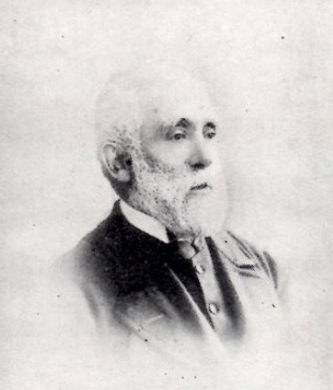
The Henry Cook Centre is far more than a building – it is the living legacy of one man’s remarkable vision for a better Gosport. Rooted in faith, compassion, and tireless service to others, the story of Henry Cook is one of practical Christianity in action. His work began over 170 years ago, yet it continues to impact lives to this day.
Henry Cook was born in 1824 and settled in Gosport around 1844. A skilled painter and decorator by trade, he set up his business in the High Street. But it was his Christian faith and passion for social reform that came to define his life’s work. Deeply moved by the poverty, hardship and neglect he witnessed in the town, he turned his attention from paintbrushes to people.
At a time when the Industrial Revolution was in full swing, many sailors were recruited through press gangs and sent away for months or years at a time. This often left behind destitute families, widows, and orphans living in desperate conditions. Henry Cook responded to the crisis not with charity alone, but with long-term solutions that addressed education, welfare, and spiritual care.
In 1853, Henry Cook established his first Ragged Day School and Sunday School for boys at 80 High Street, offering education and hope to children who otherwise had no access to schooling. Ragged Schools were an early form of free schooling for the poorest in society, focusing on the “3 R’s” – Reading, wRiting and aRithmetic – long before the Education Act made school attendance compulsory.
By 1858, Henry Cook had expanded his vision and founded a more permanent Ragged School at 44 & 46 South Street. A year later in 1859, he set up a Boys Industrial Home in Stoke Road, combining shelter with skills training to help young men find meaningful employment.
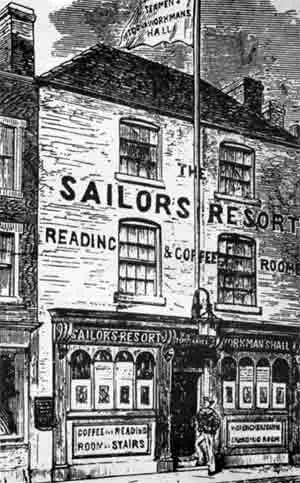
As a devout Christian, Henry Cook also believed in ministering to the soul as well as the body. In 1869, he founded the Portsmouth and Gosport Seaman’s Mission at 66 South Street. The Mission not only cared for seafarers but also included a Ragged School for girls, situated near the George & Dragon Pub.
Henry Cook’s approach was holistic, combining spiritual outreach with practical help. His belief in temperance led him to open Reading Rooms and Coffee Rooms around 1875, offering safe and sober alternatives to pubs. These were established in places like 47 Stoke Road, Beach Street, and later at The Quay and Rudmore Place in Portsmouth.
Henry Cook’s influence reached far beyond Gosport. He had a heart for seafarers, who were often forgotten and spiritually neglected. To reach them, he took the Gospel to the water.
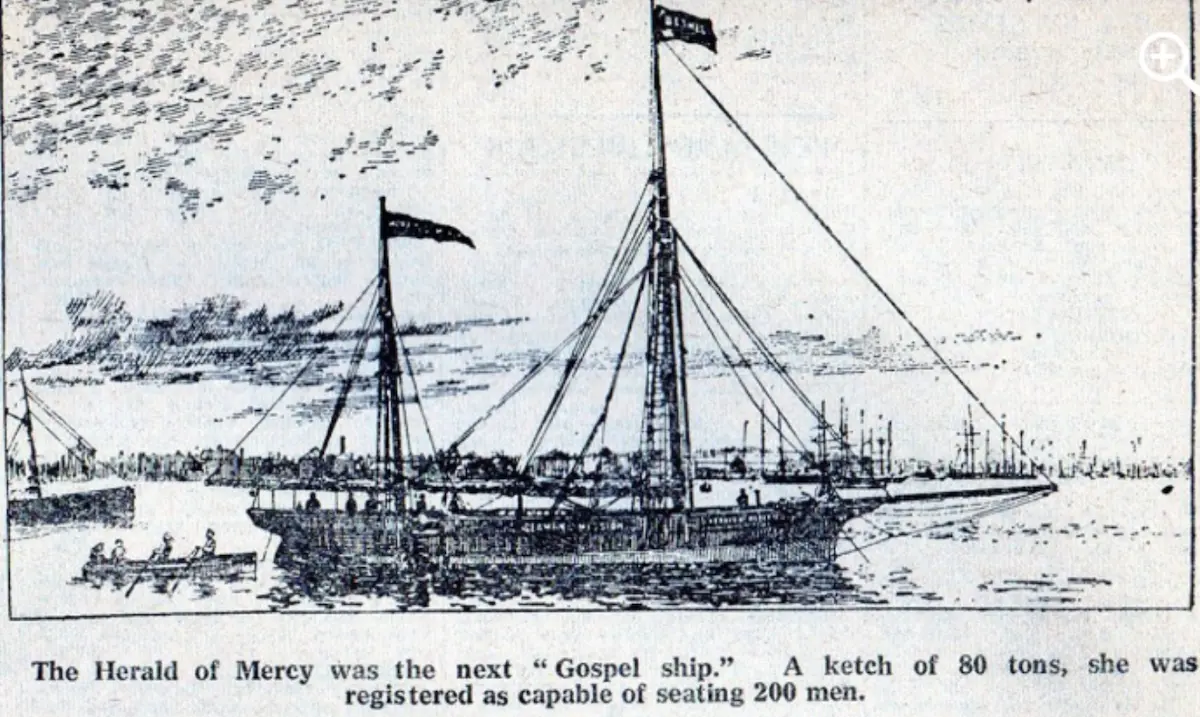
In 1887, he replaced older boats such as the Annie and a wherry (serving the Portsea to Porchester route) with two new schooners: The Mystery and Herald of Mercy. These ‘Gospel Ships’ visited ports, lightships and lighthouses across the UK and France, distributing food, knitted clothing, gospel tracts and hosting onboard meetings. They became floating missions in their own right.
Eventually, Henry Cook created a floating church docked at Portsmouth, with over 27 people regularly attending. In 1893, he even commissioned a new auxiliary screw steamer named The Good News, capable of holding up to 300 people, specifically designed for floating evangelism.
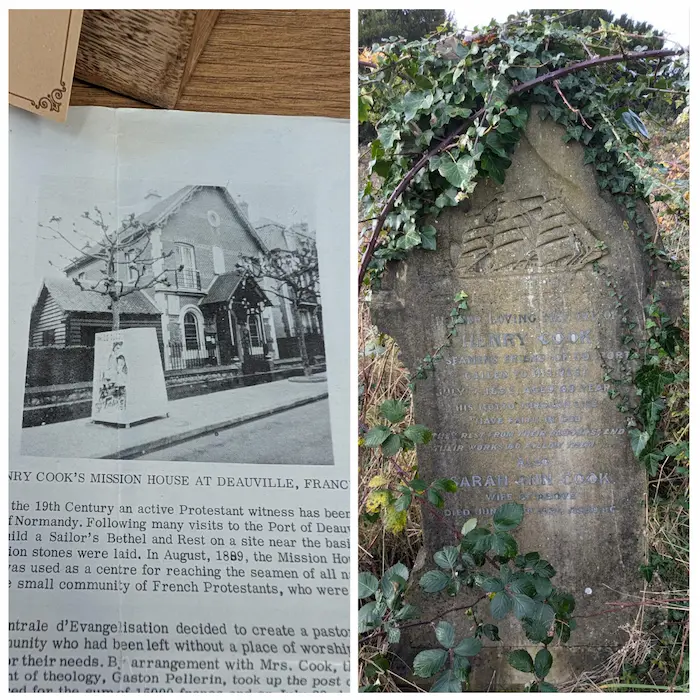
Henry Cook’s vision expanded into Europe, most notably in Deauville, France, where in 1889 he founded a French Seaman’s Mission and hospital. His work overseas mirrored his efforts in Gosport – to preach the gospel, care for the poor, and improve lives through education and support.
In the final years of his life, Henry Cook remained committed to missionary work. In 1890, he established a Mission Hall in Forton Road, Camden Town, to serve soldiers from nearby forts and barracks. His passion for spreading Christian values to those in need never faded.
Henry Cook passed away in 1893, fittingly, in the Mission Hall in Deauville, France – a place born from his vision and compassion.
The charity founded by Henry Cook endured long after his passing, steadfastly serving Gosport and local residents with compassion and purpose. Even by the time of the 1953 Coronation of Queen Elizabeth II, the organisation had celebrated its centenary and continued to offer vital community support.
In 1969, as Gosport underwent significant redevelopment, the original mission buildings were demolished. A new Bethel Mission Hall was built on South Street, adjacent to the town precinct. Despite this change of address, the Mission remained rooted in Henry Cook’s founding values of Christian faith, hope and charity, maintaining its local presence.
At the turn of the millennium, stewardship of the mission was assumed by a new church group, which rebranded it as “The Waterside Community Church.” Under this new name, the charity upheld its dual purpose: providing a welcoming space for the neighbourhood and continuing its faith- based and charitable work, echoing Henry Cook’s vision right through into the 21st century.
The legacy of Henry Cook lives on through The Henry Cook Centre, the last remaining charity tied directly to his work. In 2018, the Trustees renamed the Centre in his honour to preserve the memory and mission of its founder.
The Centre now operates as a multi-use facility at the heart of Gosport, combining:
A community space for local charities, social groups and volunteer-led initiatives.
Home to Waterside Bethel and other Christian groups continuing Cook’s Gospel mission.
Run entirely by volunteers, the Centre continues to spread the Good News about Jesus Christ and to serve the community in the spirit of Henry Cook – offering hope, help and a warm welcome to all.
Join our friendly team and help keep Henry Cook’s legacy alive! Whether you can lend a hand with events, assist visitors, support the Waterside Support Group, or help us online with social media, every bit of time makes a difference.
The centre is a welcoming, inclusive space — and we’d love to have you as part of our community.
Click the button below to get involved!